![]()
The purpose of the Dr. Rogers Prize is to highlight the important contributions of complementary and alternative medicine to health care. This $250,000 biennial award celebrates the leaders and trailblazers who have dared to pursue the unfamiliar and new approaches that come under the expansive umbrella of Complementary & Alternative Medicine.
It takes a remarkable person to think beyond the boundaries of accepted theory, to have the courage to put into practice new ideas and methods, and to persist in their pursuit - often in the face of opposition and criticism. These are the independent minds who pioneer and blaze new trails.
The Dr. Rogers Prize seeks to recognize those who embody a level of vision, leadership, and integrity comparable to that exemplified throughout the career of Dr. Roger Rogers, for whom the prize is named. Making a significant contribution to the field of Complementary and Alternative Medicine in Canada, the recipient of this award is an individual who:
- Demonstrates commitment to the practice, research and/or advocacy of complementary & alternative medicine
- Displays vision, leadership and integrity throughout their activities
- Collaborates across disciplines and healing philosophies
- Acts as a catalyst in advancing the field of complementary and alternative medicine
We encourage nominations from across the hugely diverse range of services and areas of focus that comprise complementary and alternative medicine.
Many treatments and practices that we now consider to be commonplace – even common sense - have historically faced opposition and resistance. Many were initially considered preposterous and were ridiculed, rejected and dismissed.
Ideas like those of Dr. Ignaz Semmelweis, who in the mid 19th century documented that the practice of hand washing by doctors between patients reduced the mortality rate in obstetrics wards dramatically. The germ theory of disease had not yet been developed and his work was rejected. At the time, it was said to lack scientific basis and was dismissed as religious or superstitious. The evidence that hand washing was effective in saving lives was accepted after Dr. Semmelweis had been institutionalized and died. It was not until Louis Pasteur was able to develop and conduct experiments that clearly proved the correctness of the theory that it was widely, though not initially wholly, accepted as true.
In 1983 Doctors Barry Marshall & Robin Warren proved that Helicobacter pylori bacteria were responsible for stomach ulcers. This flew in the face of accepted wisdom that ulcers were caused by stress, spicy food and stomach acid. Also, everyone knew that bacteria could not survive in the acidic environment of the gut.The discovery was ridiculed. Dr. Marshall proved his point by experimenting on himself, ingesting the bacteria and developing ulcers, which were then treated with anti-biotics. It has taken many years to change the established medical practice for treating ulcers (see timeline). In 2005, Drs. Marshall & Warren won the Nobel Prize in Physiology or Medicine for this work.
Most recently, Dr. Harald zur Hausen persisted against accepted theory to prove that oncogenic human papilloma virus (HPV) caused cervical cancer. Dr. zur Hausen first published his hypothesis about HPV in 1976 and pursued the theories related to this discovery against ridicule and opposition for over three decades. His theory was proved correct, and he brought significant insight to the second most common cancer among women. He was awarded the 2008 Nobel Prize for Physiology or Medicine.
Dr. Rogers cared for people with cancer who had been told that there were no further treatment options available to them and that they should get their affairs in order. His approach was centered around stimulating the immune system to recognize and deal with the cancer. He took this course of action knowing that the evidence had not yet been established but was adamant that these people had the ‘right to try before they die’. Dr. Rogers was committed to his patients, willing to challenge conventional thinking, daring to step outside the comfort and assurance of accepted practice in order to explore possibilities for people who had been relegated to palliative care. The idea of harnessing the immune system to fight cancer has caught hold and is now being researched by the B.C. Cancer Agency’s Dr. Brad Nelson, among others. The Centre Dr. Rogers established in the 70’s has evolved into Inspirehealth, which offers integrated cancer care to an increasing number of patients.
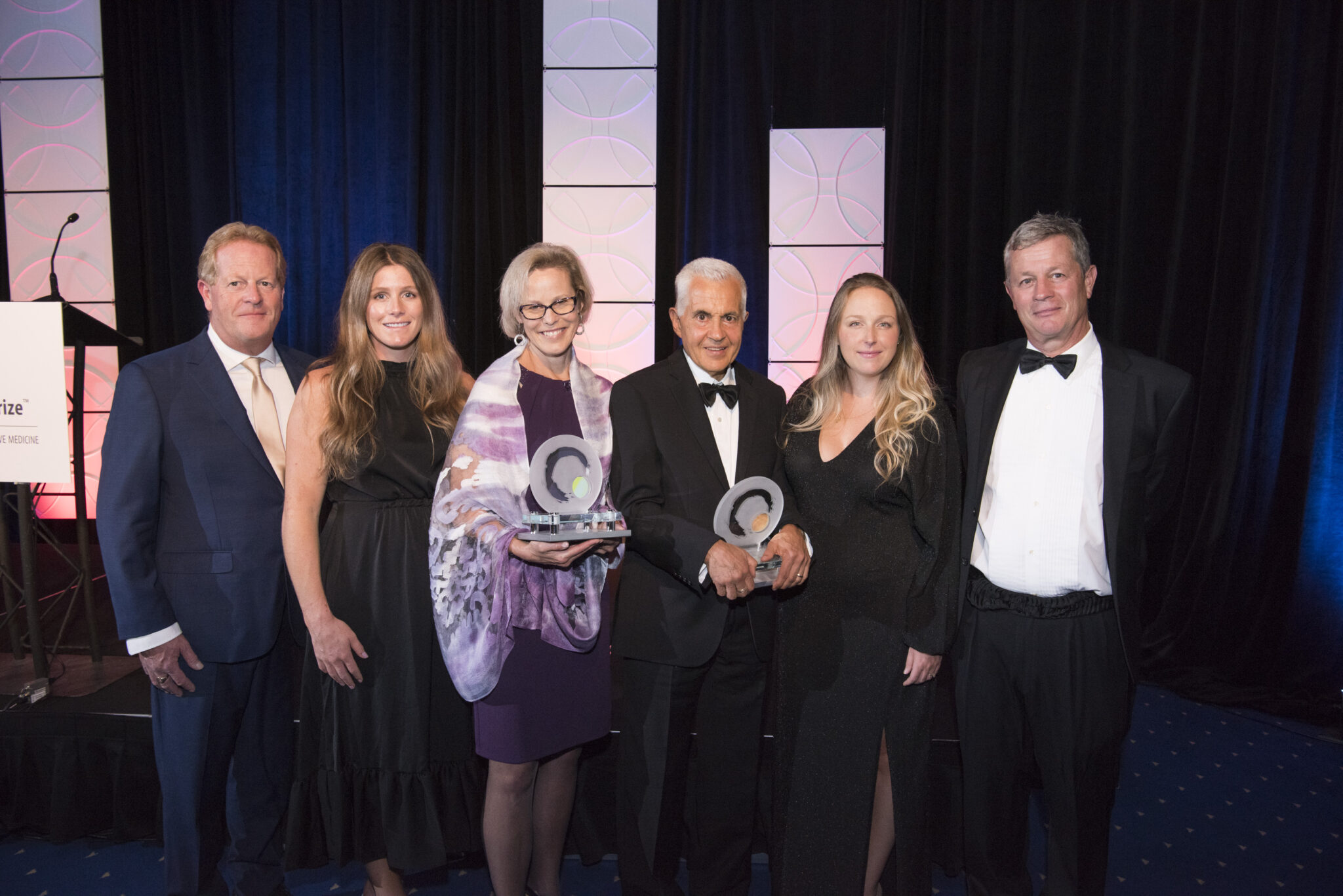
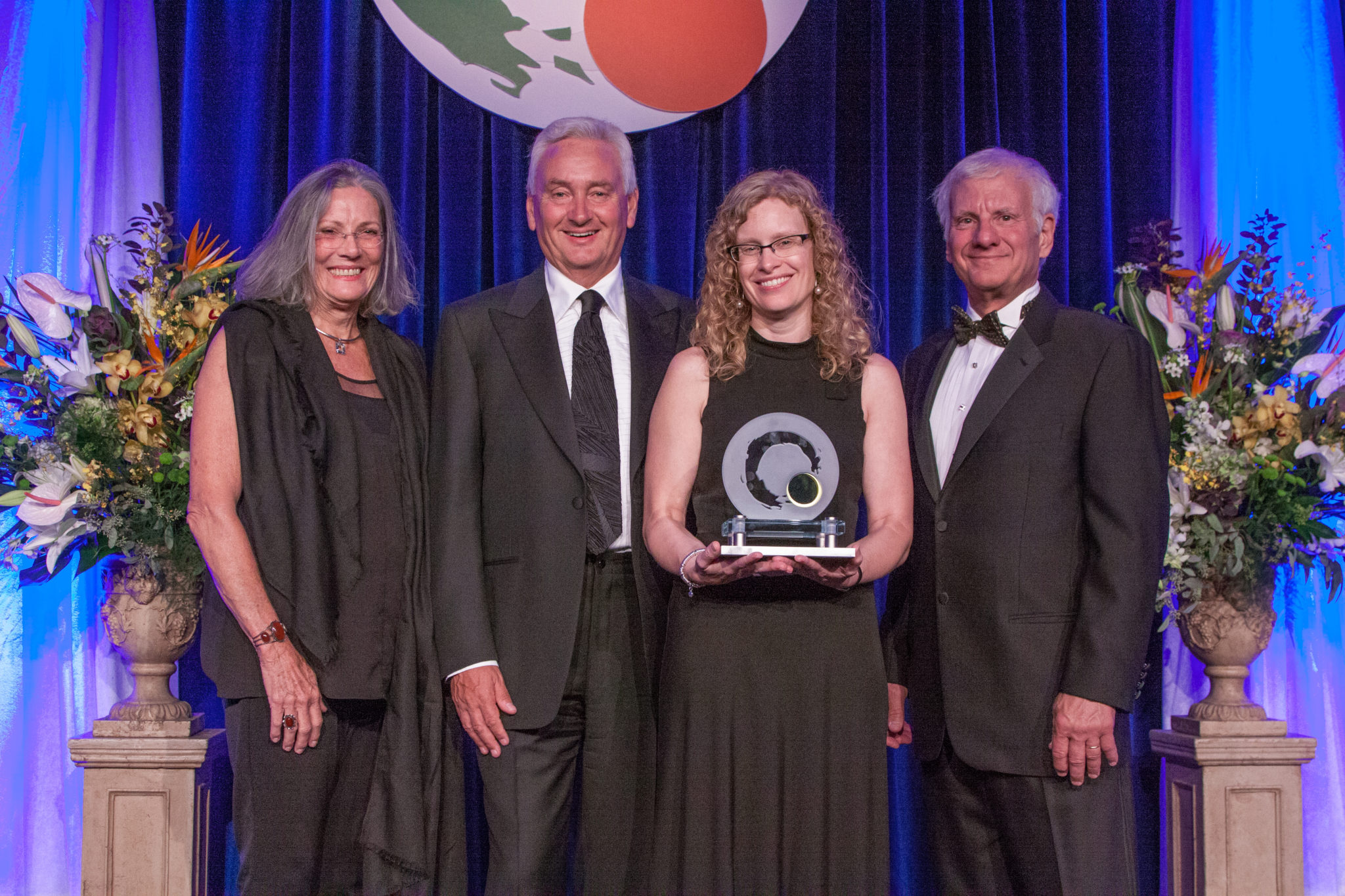
In 2007 Dr. Abram Hoffer and Dr. Alastair Cunningham were awarded the first Dr. Rogers Prize. The panel of knowledgeable international jurors, Dr. James Gordon, Dr. George Lewith, Dr. Mary Ann Richardson, Dr. Simon Sutcliffe and Dr. Andrew Weil, had the challenging task of selecting a winner from a field of high achieving candidates. Adding to the difficulty was the fact of the backlog of unrecognized people in this field, many of whom were nominated. After lengthy and careful deliberation the Prize was split between Drs. Cunningham and Hoffer. Their respective bodies of work exemplified the courage, passion and trailblazing attitude that are fundamental to the commitment required to succeed in the face doubt, opposition, and often blatant rejection. It is this type of groundbreaking, pioneering activity that the Dr. Rogers Prize is meant to reward, inspire and encourage.
In 2009, the $250,000 Dr. Rogers Prize for Excellence in Complementary & Alternative Medicine will be awarded to an individual who has demonstrated vision, leadership and integrity and who has made a significant contribution to the field of Complementary and Alternative Medicine (CAM) in Canada.
Funded by Vancouver’s Lotte and John Hecht Memorial Foundation, the Dr. Rogers Prize is awarded biennially and is the largest of its kind in North America.